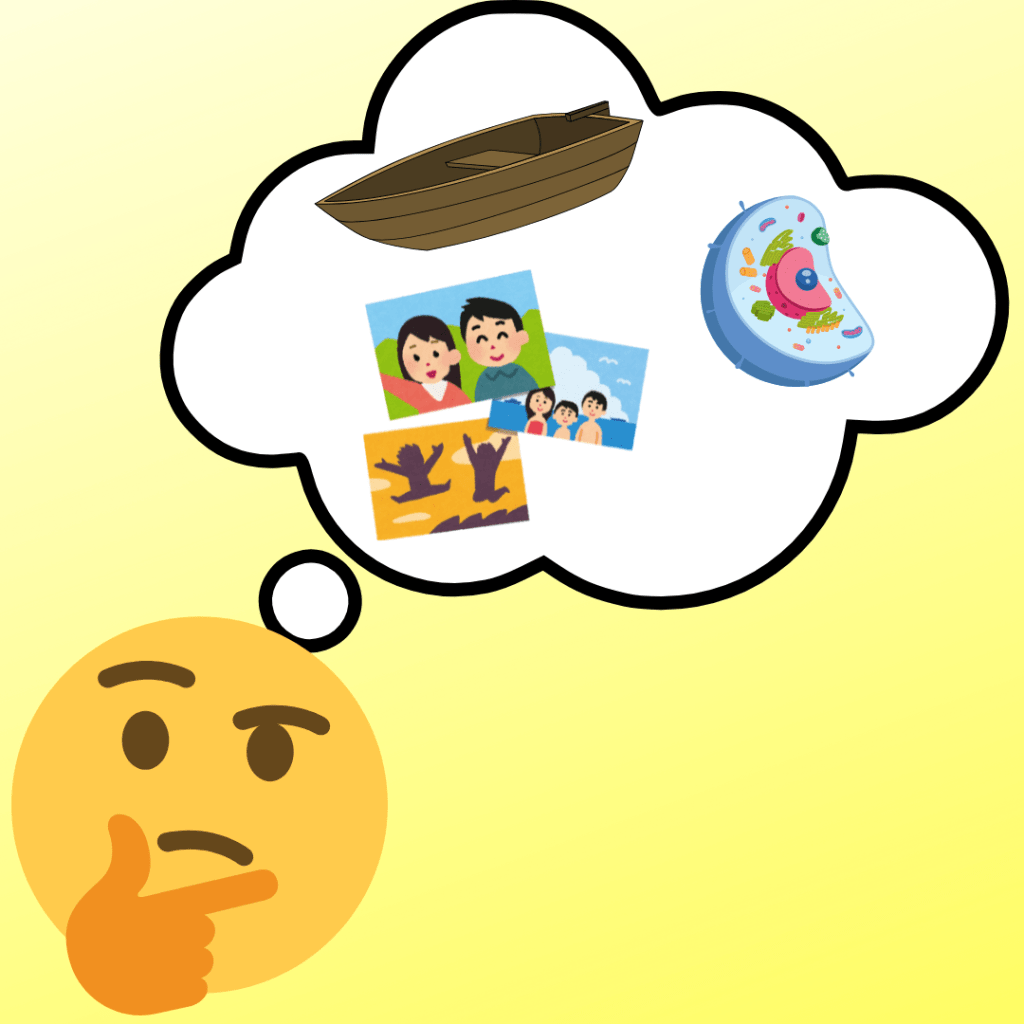
Are we the person that we were yesterday?
I was casually pursuing YouTube in my free time the other day, and I came across a video by Kurzgesagt titled “What Are You?“. In this video, the narrator brings attention to the idea that we constantly lose cells, 1 to 3 million per second. It also goes on to say that we will have replaced most of our cells every 7 years and that by the end of our life, almost every cell in our body has been replaced at least once. There is a lot to unpack here. I think that the implications have some pretty interesting philosophical applications.
First, let’s start with a thought exercise. The Ship of Theseus is a thought experiment created by Thomas Hobbes. The titular ship was one of great historical importance to the people of Athens. To commemorate the ship, they displayed it for the people to see. As the years passed, the ship began to rot. As each plank would rot and decay, the keepers would replace the plank with a new replacement cut to the exact specifications. At one point in history, every single one of the boards had been replaced. There was not a single original board on this ship. Is this still the ship of Theseus? If not, at what point does the ship stop being the historical ship of Theseus and start becoming a replica?
This thought experiment is a paradox with no correct answer. All answers you could think of would be relative to your perspective on life. Let’s shift back to the concept of cellular replacement. If our cells constantly replace themselves, at what point are we no longer the beings we were at birth? This gave me a few interesting thoughts as I sat back and pondered the concept.
- The idea that a bit of part of us dies each day is haunting. I have memories of touching my face as a child; the hand that touched my face in that memory is not the hand that is being used to type up this writing. The face I remember feeling is not my current face. They are an exact copy, but they are not the exact same ones. I have the memories of another being’s childhood in my mind. That person may have looked like me and contained part of my cellular structure, but for the most part, it wasn’t “me.” If I donated a kidney to someone, I wouldn’t say that their memories are now mine because we shared parts of a cellular composition.
- The being that I call my mother is, in many ways, not the physical being that gave birth to me, and I am not the physical being that she gave birth to. She didn’t give birth to a body that would live a human lifetime. She gave birth to an idea that would live a human lifetime. What we see as our perpetual state of consciousness is really just an idea that each group of new cells continues.
- Humanity is an idea in the same way that our person is. You can think about it like a great body, and we are the cells. Each one of us plays a part in the continued growth and perpetuation of the human race. As we get old and die, we are replaced by younger people in the workforce. We pass the memories of generations to the next group, who will continue the tradition and do the same. While individually, we may no longer physically live, the idea we perpetuate lives on.
- The idea that we are an idea that can be carried on by future cells means that, in a way, impacting the ones around us spreads the idea around, and we never fully die. Our loved ones may no longer be with us in body, but the idea of them is still alive and well inside of us. Our cells continue that idea when their cells can no longer.
These are just a couple of examples of ways that you can use this idea to reconceptualize your daily life. For me, it helped me achieve mindfulness as I sat on my balcony on a nice (almost fall) day! What kind of thoughts does it make you think?
 Joseph Blog